Tuesday, 15 June 2010

Female presenters out to pasture at 45, says axed Countryfile presenter

No woman is safe in television once she reaches 45, according to a Countryfile presenter who is suing the BBC for age and sex discrimination.

Miriam O'Reilly, 53, was made redundant from the BBC One programme last April, along with three female colleagues of similar age. They were replaced by the younger presenter Julia Bradbury.

"This was discrimination, which wouldn't happen if I was black or disabled," said Miss O'Reilly, an award-winning journalist who also worked on Radio 4's Farming Today programme.

"To be condemned and made redundant, to have my life cancelled because of my age... No, I'm sorry, they can't do that. That's wrong. The BBC has to start listening. We are the disappeared. No woman is safe in TV once she reaches the age of 45."

Miss O'Reilly said her age was no bar to doing the job. "I have got all my faculties. I run, hike, climb - I love being outdoors. My age shouldn't be an issue if I can still do my job, which I believe I can.

"I was good at what I did. I loved working for Countryfile and was passionate about what we were doing on the show."

However, Miss O'Reilly claims that she was made to feel embarrassed about her age. Senior editors would "get very upset" if her grey roots showed through, she claimed, adding that a cameraman once presented her with a can of hair dye and a colleague suggested she try Botox.

On another occasion, she alleges, a director joked that the advent of high definition television would be a critical moment in her career because "we won't be able to disguise your wrinkles then". Another presenter was told to lose weight, she claimed.

Countryfile's line-up was changed when the BBC announced plans to move the show from Sunday mornings to a primetime slot. While the female presenters were replaced, 69-year-old John Craven remained in his job.

Ratings have gone up since the primetime move, but Miss O'Reilly told the Mail on Sunday: "They justify all this with audience figures, but how do you know you wouldn't get those same figures with older women? There are no older women in primetime. Surely that needs to change."

She is due to face her former employers at a tribunal in November. It emerged last week that the number of sex and age discrimination brought against the BBC by female employees has quadrupled in the past two years.

The corporation faced criticism for sacking Moira Stuart, the newsreader, when she was 55, and replacing Strictly Come Dancing judge Arlene Phillips, 67, with Alesha Dixon, who is half her age.

Newscaster Anna Ford and Gardener's World presenter Carol Klein have also spoken publicly about perceived ageism within the corporation. Other broadcasters have faced accusations of discrimination against older women - Selina Scott won a £250,000 settlement against Channel Five in 2008, claiming she was passed over for a job due to her age.

Mariella Frostrup, the Radio 4 presenter, recently claimed the Today programme lacked women presenters because it was run by "a bunch of misogynists", although she later backtracked and said her remark had no factual basis.

When Miss Bradbury was unveiled as the new face of Countryfile, her age was given at 36. However, it later emerged that she was actually 38.

A BBC spokesman said: "Our programmes always strive to reflect as broad a range of diversity as possible. For example, Kirsty Wark, Maxine Mawhinney and Martha Kearney regularly feature on BBC television and radio shows as well as presenters including Gloria Hunniford, Sheila Hancock, Jennie Bond, Angela Rippon and Annie Nightingale.

"Any suggestion that the presenters of ‘Countryfile’ were replaced on the grounds of age is absolute nonsense.”

Daily Telegraph

Wednesday, 9 June 2010

Wise Owls ageism and the myths


  • Myth Chronological age determines health and age brings illness and disease.
  • Myth Getting older is associated with a loss of cognitive capacity.
  • Myth Older workers have less physical strength and endurance.
  • Myth Older workers tend to have poorer sensory abilities such as sight and hearing.
  • Myth Older workers have more time off sick.
  • Myth Older workers have difficulty adapting to change.
  • Myth Older workers find it hard to learn new information making their knowledge and skills outdated.
  • Myth Older workers have more accidents in the workplace.
  • Myth Older workers are less productive.
  • Monday, 7 June 2010

    NHS age discrimination manager awarded £147,000


    A senior NHS manager has been awarded £147,000 after winning a battle to prove that she was passed over for promotion because of her age.

    An employment tribunal in Leeds found that Linda Sturdy, 60, who worked in the breast screen clinic at the city’s Seacroft Hospital for 17 years, was subject to age discrimination when a colleague 13 years her junior and with 35 years less experience than her was promoted to run the unit.

    Sturdy had been the preferred candidate for the role until she revealed she had just over three years to go until she hit the retirement age. A manager at the Leeds Teaching Hospitals NHS Trust told her: “I didn’t realise you were so old,” before giving the promotion to the younger woman.

    Sturdy was subsequently sacked in May 2008 after refusing to take a more junior position.

    Last year, Sturdy was awarded £40,000 in damages after it was proved that her managers had behaved in what was described this week as a “high-handed, malicious, insulting and oppressive” fashion.

    According to the Yorkshire Evening Post, Judge Christine Lee, said at the hearing that her dismissal had broken employment law and that the Trust was trying to “defend the indefensible”.

    “It’s one thing to have a threat of dismissal handing over you and another for it to be carried out in such a high-handed fashion”, she added.

    The latest payout was to cover Sturdy’s loss of income and pension, injury to feelings, aggravated damages and any interest owed. She now intends to pursue the Trust for legal costs.

    Jackie Green, HR director at the Trust, said that every effort had been made to resolve matters outside of court and avoid further expenditure on the case, which came out of public funds.

    “The Trust has accepted that mistakes were made in the handling of this original issue, and that regrettably Mrs Sturdy has, as a consequence, been the subject of less favourable treatment and is, therefore, entitled to compensation on that basis,” she added.

    Wednesday, 2 June 2010

    Wise Owls feature in new book


    Wise Owls and their campaign for an age audit has featured in a new book named 'The dynamics of Managing Diversity' by Gill Kirton and Anne-Marie Greene. Wise Owls continuing campaign to get an age audit conducted across the country is still gaining momentum and will continue until an age audit is promised by the government.

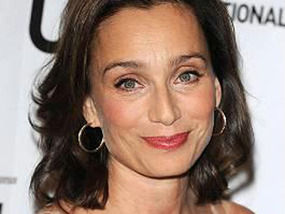
    Ageism has no role in France claims Kristin

    The 50-year-old beauty, who has long lived in Paris, believes film- makers in France have a far healthier attitude to older actresses. Kristin, who appears in French movie Leaving, says: “I think it’s because England tends to follow America so strongly or they’re making films for children – and when I say ­children I mean anyone under 25.

    “I’m really getting evil in my old age! French cinema is not afraid of women of my age. I think it’s less terrified of disobeying the rules of what is beaut­iful and what is acceptable to look at.”

    The actress, whose film credits to date memorably include The English Patient and Four Weddings And A Funeral, is required to bare all in her latest flick, which focuses on a woman’s struggle to escape her unhappy domestic life.

    “Obviously I haven’t done scenes like that for a very, very, very long time and I don’t think I’ll be doing them again any time soon!” she tells Easy Living magazine, before modestly insisting that her well-toned appearance was courtesy of “good lighting”.

    She adds: “In fact, strangely, I feel much more confident about my appearance now, even with wrinkles on my face, than I did when I was 25. Which is bizarre isn’t it?

    “If one could preserve ­oneself at 45 then I think that would probably be ideal – but you can’t.

    “Unfortunately lots of women try to do just that and that’s where they come a cropper because it doesn’t really work does it?”

    Wednesday, 19 May 2010

    Britons face massive pension gap

    Britons are facing a £1.2 trillion pensions gap between what they think their retirement income will be and how much they will actually receive, research showed.

    The average person needs to save £50,000 more during their working life than they currently plan to in order to obtain the pension they want, according to consultancy firm Hewitt Associates.

    The group found that the average worker, who was aged 43 and earned £25,000, hoped to retire at 63 on a pension worth £15,300 a year.

    But they are saving only 5.9% of their salary into a defined contribution pension each year in order to achieve this, meaning their pension is actually likely to be worth only around £5,900 annually in real terms.

    Even once the state pension is factored in, people would still need to continue working until they were 70 or increase their pension contributions to more than 19% of their pay to receive their desired retirement income.

    The group said the gap between the pension that people hoped to receive it and its projected size had soared by 50% during the past six years, with Britons facing a pensions shortfall of £800 billion when the same research was carried out in 2004.

    Lynda Whitney, pension consultant at Hewitt Associates, said: "Saving for retirement is a major issue and one of the largest socio-economic problems to be faced by the new UK Government.

    "This saving gap cannot be met through higher state benefits funded by taxing future generations as the proportion of pensioners is increasing relative to the working population.

    "People need to wake up to the fact they will have to save more, work longer and/or live on a lower pension in retirement."

    But when told about the shortfall they faced only 10% of people were prepared to retire on less than they had hoped, while just 27% said they would increase their contributions.

    Press Association

    Tuesday, 11 May 2010

    Wise Owls Comes of Age

    Last week I went to represent Wise Owls in Brussels at the AGE-Platform Europe annual conference.

    It has been a long journey getting into AGE – as the membership historically was blocked at national level. This has been particularly true in the UK where Age Concern (partnered by Help the Aged) had an effected monopoly on members and excluded new applicant organisations. Now that we have been voted in as full members of AGE-Platform Europe, we are now able to be members of the UK branch of AGE.

    I was welcomed by the Age UK representative (Age UK is the amalgamation of the old Age Concern and Help the Aged) and was pleased to be asked to attend the UK AGE meeting in October.

    There is a need to democratise the national AGE networks, and we hope to help the UK open and welcoming to organisations involved in battling ageism across the UK, bringing with us our marketing expertise and commitment to democracy.

    There is also a need to widen the participation of organisations in Age Projects and expert groups. There is currently only one representative per country in each group and we hope to push for specialists and experts in these areas to represent the UK at an EU level. We hope that we be able to join the expert group unemployment given our lead in roll in developing employment support for older working people.

    It was exciting an simulating to be apart of the only main EU network representing older people and as a result we hope to both promote the work of AGE there projects, research and campaigns in the UK and hope AGE will be promoting our campaigns and best practise in employment and training to there 150+ member organisations spread across the whole of the EU.

    Some comments on the make up of the conference:
    1. There were only 2 non-white people attending the conference of nearly 150 people.

    2. Despite the fact two-thirds of people over the age of 65 are women across the EU, only around 40% of the conference attendance were in fact women.

    3. The vast majority of organisations who are members of AGE are made up of and represent the interests of pensioners. However, my plea for greater representation and emphasis on the needs of the older working age population (50-65+) were well received and I was able to network with other organisations across the EU who also focus on proving support to older working age people.


    There were many calls/mine amongst them/ for there to be greater support in overcoming the high numbers and percentage of older working age people out of work. While there are considerable discrepancies in the situation facing older people in different EU countries, there was general agreement that older people are often excluded from the lists of the formally unemployed which has distorted the statistics on age and non-employment. This means that older people do not get there full unemployment entitlement and that older people non-employment is not regarded as a priority for government intervention and financial support. We hope to have both UK and EU campaign to start overcoming this problem.

    The AGE membership there was a general feeling of outrage and the situation and treatment of older people and great worries were expressed about the impact of the coming economic criticise at the numbers of older people who were likely to face redundancy and consequent poverty.

    Some of the individuals that I met who were both interested and impressive included representatives that were from – Malta, Finland, Holland, Sweden, Hungary, Cyprus, Slovakia, Slovenia, Spain, France, Italy and Ireland.

    I’ll keep you updated on activities that arise from our membership of AGE and promote some of the key facts, research and campaign information coming out of Age-Platform Europe. Anyone wanting more information contact me by e-mail.